Wisdom Light

Wisdom Light

In 1980, after studying Seven Days Chan Retreats under Master Sheng Yen and serving as a retreat assistant, Venerable Chi Chern began teaching meditation courses in Malaysia with Master Sheng Yen's permission, providing students with opportunities to learn and practice seated meditation.

However, the meditation sessions in these courses were short-term and yielded limited results. After teaching theoretical aspects, only a small portion of time remained for students to learn foundational techniques, leaving insufficient time for deeper practical immersion.

Recognizing the greater effectiveness and experiential depth offered by the structured approach of intensive Chan meditation retreats, and given the pivotal role these retreats play for meditators, Venerable Chi Chern, after years of contemplation and meticulous preparation, personally traveled to Taiwan to meet Master Sheng Yen.

After a lengthy discussion and understanding Venerable Chi Chern's compassionate vows, Master Sheng Yen, following the Chan tradition, formally transmitted the Dharma lineage to Venerable Chi Chern. He passed on the Linji lineage of the great modern Chan master, Venerable Xu Yun, making Venerable Chi Chern a fifth-generation disciple under Xu Yun's lineage. Master Sheng Yen bestowed upon him the Dharma name "Chuan Xian Jian Mi" and authorized him to lead Seated Meditation Seven Days Retreats.

From December 22 to 29, 1985, Venerable Chi Chern conducted the first Seated Meditation Seven Days Retreat at the Taiping Buddhist Association, following the schedule and rules for intensive Chan retreats established by Master Sheng Yen. The retreat primarily focused on teaching the Samatha-Vipassana method (breath counting).

Starting in 2007, Venerable Chi Chern began leading and instructing in the methods of Huatou Chan and Silent Illumination Chan, marking the beginning of a new chapter for the practice of Han Chinese Chan Buddhism in Malaysia.


Purpose 

  • To guide the correct concepts and methods of spiritual practice.

  • To provide intensive meditation courses.

  • To implement the guidance of balancing understanding and practice in Buddhist cultivation.

  • To nurture Dharma propagators with religious experience and sentiment.


Emblem

  • The emblem's design depicts a practitioner in a meditative posture.

  • The three red circles represent the threefold training in Buddhism — precepts (śīla), concentration (samādhi), and wisdom (prajñā).

  • Each red circle is connected by a straight line, signifying that the threefold training is interconnected and mutually supportive.

  • The hexagon symbolizes the six pāramitās — generosity, precepts, patience, diligence, meditation, and wisdom.

  • The oval shape represents the lower base of the full lotus sitting position.


Meditation Instructor Team

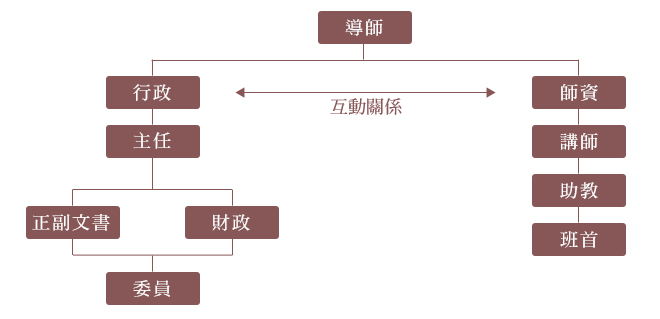
Venerable Chi Chern also established a Meditation Instructor Team, which maintains an interactive relationship with the administrative unit. The Meditation Instructor Team is responsible for the teaching guidance, scheduling, and promotion of beginner-level meditation courses. Since 1997, the team has regularly organized instructor training camps to cultivate qualified professionals in meditation teaching.

The Meditation Instructor Team consists of three levels of teachers: beginner-level (Class Leader), intermediate-level (Assistant Instructor), and advanced-level (Lecturer). Each level requires approval from Venerable Chi Chern and carries distinct responsibilities and roles:

⑴  Beginner-Level Teacher (Class Leader)
  • Can guide up to ten participants. If the number exceeds ten, the regional Assistant Instructor must be consulted or invited to assist.
  • Leads short-term or long-term group meditation sessions, responsible for timekeeping and demonstrating/guiding yoga exercises.
⑵  Intermediate-Level Teacher (Assistant Instructor)
  • Can guide up to twenty participants. If the number exceeds twenty, a Class Leader must assist. For groups exceeding forty participants, prior approval from Venerable Chi Chern is required.
  • Leads short-term or long-term group meditation sessions.
⑶  Advanced-Level Teacher (Lecturer)
  • Meets all the qualifications of an intermediate-level teacher.
  • Delivers lectures during intensive meditation retreats or instructor training courses.
  • Supervises Assistant Instructors and Class Leaders.
(Note):
In situations where a Class Leader or Assistant Instructor is unavailable, or if the region lacks such personnel, a Senior Student may assist in leading group meditation sessions. A Senior Student is not a formal member of the Meditation Instructor Team (though they may come from the team) and assists a Class Leader or Assistant Instructor in leading sessions.
 
Senior Student
  • Assists a Class Leader or Assistant Instructor in leading group meditation sessions.
  • Only responsible for timekeeping and guiding yoga exercises.
  • Cannot give Dharma talks or teach meditation methods.
  • Must have participated in a seven-day meditation retreat and served as a Meditation Monitor once or twice.
  • Requires approval from Venerable Chi Chern.
  • Must attend a seven-day meditation retreat at least once a year.
     
Meditation Monitor
  • During intensive meditation courses, Venerable Chi Chern may appoint participants as Meditation Monitors to assist in supporting the practitioners.
  • A Meditation Monitor is not a formal member of the Meditation Instructor Team (though they may come from the team). Their role is limited to the duration of the intensive meditation course and concludes upon the completion of the course.
     
(Note: This content has been translated by AI. In case of any discrepancies, please refer to the original Chinese text as the authoritative source).

The Expedient Means of Zen

Though the mind wanders and life distracts, persistent effort gradually stabilizes awareness. When coupled with static practice, sustained dedication eventually yields seamless mastery—unifying body-mind and inner-outer realms is no impossibility.

The Gateway to Zen

The belief in "inherently pure mind-nature and intrinsic Buddha-nature" was once universally acknowledged—not just in Zen but throughout Buddhism and society. Zen practitioners relied on this right view, ensuring their practice had clear direction, free from blind striving.

The Realm of Zen Enlightenment

Thus, one who awakens to their true nature transcends all worldly dualities—impermanence, suffering, non-self, and impurity (the four correct views of the mundane world) as well as permanence, bliss, self, and purity (the four inverted views)—and realizes the absolute truth of eternal bliss, true self, and purity.

The Thought of Chan

During Chan’s golden age, its expedient methods, entry points, and realization were all vividly expressed, though historical records often lack systematic organization. The teachings were fully present in the instructions of Chan masters and scattered throughout classical texts—the challenge lay in how to synthesize them.

The Essence of Zen

The nature of reality is as it is; the mind is inherently pure. Hence, Zen practice is nothing more than manifesting the essence and function of the originally pure mind—not seeking, not grasping, not eliminating, not adding. Yet, it is also not a return to an original substance or divine Self. All this is simply the unique characteristic of the Dharma: non-self and lack of inherent nature—nothing more.

The Verification of Chan Practice

Awakening in the Buddhist path entails realizing selflessness (anātman) and essencelessness (niḥsvabhāva). The conceptual understanding of these truths must first be established through study and reflection, forming an unshakable conviction before one can cultivate wisdom accordingly. The development of wisdom within śamatha is vipaśyanā, and through this insight, direct realization arises.

The Three Minds of Zen Practice

Ordinary people can practice Zen. Indeed, all can practice, provided they apply themselves earnestly and consistently. Without these qualities, even the finest teacher, the most profound method, or the loftiest "talent" remains a fleeting illusion—impermanent and devoid of true substance.

The Dual Meaning of Chan

Since the truth contemplated is selflessness and emptiness (śūnyatā), as insight matures, not only is the observed phenomenon seen as empty, but the observing mind also realizes its own emptiness. When both subject and object are empty, emptiness is simply emptiness. Subject and object dissolve; all is empty—not only formless but devoid of inherent nature and mind itself.

I. Observing and Stabilizing the Mind

Those new to meditation or śamatha-vipaśyanā (止觀) practice must first harmonize posture and breath. Among the most universal methods is breath observation, where counting or following the breath serves to steady the mind. Counting each inhalation and exhalation (數息觀) or simply fixing attention on the breath's natural flow (隨息) provides concrete, practical techniques—especially effective for scattered minds or those besieged by wandering thoughts.

II. Contemplative Insight

From this clear seeing of impermanence and non-self, one recognizes all phenomena as fundamentally unarisen and naturally pacified. All apparent existence is established upon emptiness—arising and ceasing through conditions. Thus every manifestation is but a provisional appearance, seemingly real when encountered yet ultimately insubstantial. 

III. Observing Thoughts

In daily life, we may notice that our thoughts are numerous and move rapidly. However, this awareness is often superficial, limited to the coarser and more easily detectable thoughts. When we begin practicing methods of stillness and concentration, we first learn to withdraw the mind, preventing it from chasing after external objects through the five senses, and instead turn our attention inward. At this point, we see even more clearly the countless thoughts swirling within.

IV. Observing the Mind

If the observing mind grows steadily calmer, more stable, and one-pointed—simply maintaining this awareness—it can witness the natural arising and ceasing of thoughts with clarity and detachment. Unshaken, the observing mind sinks deeper, and even the most subtle layers of thought cannot escape its illumination. Deluded thoughts and wholesome thoughts are both merely thoughts—fleeting phenomena, born and vanishing according to their own causes. Thus, both are illusory.

I. Meditation Practice

Some reactions remain internal, manifesting only as bodily sensations or mental shifts without outward expression. In such cases, only the practitioner perceives them clearly, though their meaning or remedy may remain unclear. Guidance from an experienced teacher is then essential to discern the condition and apply appropriate adjustments. 

II. Zen Awakening

For Zen, nirvana is not beyond samsara but within it. Birth and death are themselves the unborn. Realizing this, the Zen practitioner "directly assumes" awakening—here and now. No need to seek pure lands afar; wherever one stands is the pure land. No need to ponder past or future; the present moment is eternity.

III. Awakening

Awakening is the penetrating insight into the emptiness of all phenomena, including the constructed self. No longer clinging to reality, permanence, or "I," one severs the engine of karma and rebirth—shattering self-view, eradicating self-love and conceit. The body-mind aggregate continues as a provisional appearance, but recognizing its illusory nature, one ceases to grasp or resist.

IV. Seeing Nature

Of course, this "self-nature Buddha" remains at the level of principle and potential. Whether the realization is thorough depends on conditions. Thus, after seeing nature, one must nurture this insight through continuous practice—until mind and nature are perceived completely, perfectly, and roundly actualized.

I. The Practice of Buddha-Recitation

Often, those who teach Buddha-recitation emphasize quantity—how many times one should recite, or setting daily targets of thousands or even tens of thousands of repetitions. As a result, practitioners focus on volume while neglecting the quality of their recitation. The outcome is distracted, mechanical chanting—what some humorously describe as "the Buddha’s name and wandering thoughts flying side by side."

II. Prostration as Spiritual Practice

Instead, consider prostration as an act of pure reverence: an expression of heartfelt admiration for the Buddhas’ perfect virtues, profound gratitude for their compassionate vows to liberate all beings, and deep appreciation for their tireless teaching that allows us to encounter the Dharma. Through their exemplary qualities, we mold our own practice, aspiring to emulate their great vows and deeds.

III. Emerging from Meditation

This dynamic application inherently involves observation. Active states demand heightened vigilance, lest external stimuli disrupt focus. When such luminous awareness strengthens, it functions equally in stillness and activity, gradually maturing into contemplative wisdom (prajñā).

IV. Walking Meditation

Ideal slow walking feels anchored, fast walking effortless, and strolling serene—achievable when body and mind fully release tension. Yet fast walking also functions as a master's skillful means: deliberately intensifying pressure to corner practitioners into mental "dead ends," sometimes triggering breakthroughs. Here, speed carries urgency rather than ease.

顯示 1 - 20 / 22 (共 2 頁)